
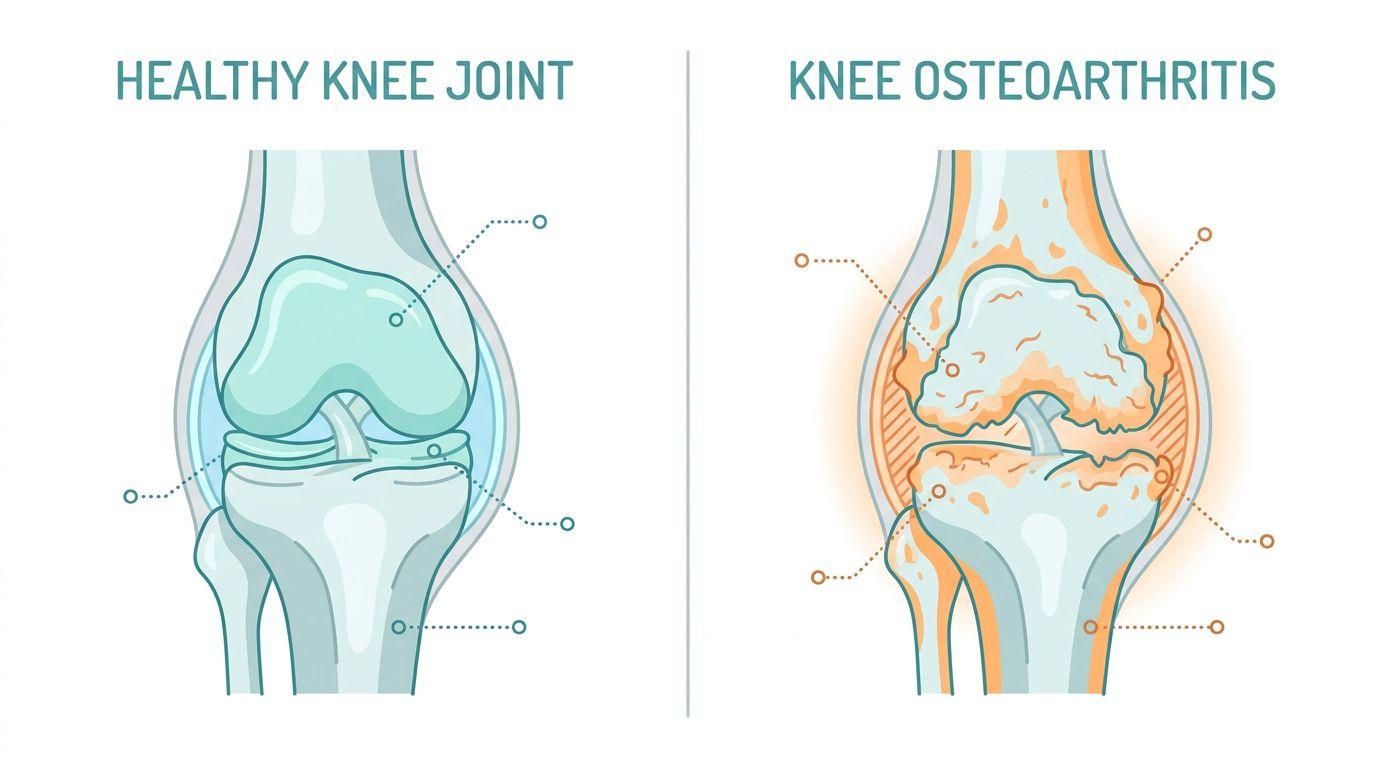
Knee pain can make everyday activities—walking, climbing stairs, getting up from a chair or sleeping comfortably—more difficult. One common cause, particularly as we get older, is knee osteoarthritis. Understanding the condition can help you have a more informed discussion with your clinician and choose a suitable management plan.
What is knee osteoarthritis?
Osteoarthritis involves changes in the joint cartilage, underlying bone and surrounding tissues. Cartilage becomes less effective at allowing the joint surfaces to glide smoothly, while other joint structures may also change. Symptoms and X-ray findings do not always match exactly: some people have visible changes but little pain, while others experience significant symptoms.
Common signs and symptoms
- Pain during walking, standing for a long time or using stairs.
- Stiffness after rest or on getting up in the morning, often easing after gentle movement.
- Swelling, tenderness or a feeling that the knee is less flexible.
- Crackling or grinding sensations when moving the knee.
- Reduced walking distance or difficulty with daily activities.
These symptoms can have other causes too, so they should not be used alone to make a diagnosis.
How is it diagnosed?
Your clinician will usually ask about your symptoms and how they affect daily life, examine the knee and assess movement, tenderness, swelling and alignment. X-rays may be advised when appropriate. MRI scans are not routinely needed for every person with typical osteoarthritis symptoms; the need for imaging depends on the clinical picture.
What can help manage knee osteoarthritis?
1. Exercise and strengthening
Appropriately selected strengthening and low-impact aerobic activity can improve muscle support, mobility and confidence. A physiotherapist can help tailor exercises to your pain, strength and balance. Start gradually and adjust activity if symptoms flare significantly.
2. Weight management, if relevant
For people who are overweight, even modest, sustainable weight reduction can reduce the load placed on the knee and may improve symptoms. Choose realistic changes that can be maintained over time.
3. Pain relief and other treatments
Depending on your medical history and risks, a clinician may discuss topical or oral medicines, physiotherapy, walking aids or selected injections. Medicines are not suitable for everyone; anti-inflammatory tablets in particular can carry kidney, stomach, blood pressure and cardiovascular risks. Avoid starting long-term medication without professional advice.
4. When is knee replacement considered?
Knee replacement may be discussed when pain and functional limitation remain substantial despite appropriate non-surgical care, and assessment suggests advanced joint disease. The decision is individual and should consider symptoms, examination, imaging, overall health, goals and expectations. Surgery is not required simply because an X-ray shows osteoarthritis.
When should you seek medical attention?
Arrange an assessment if knee pain persists, worsens, affects sleep or limits everyday activities. Seek urgent medical attention for a suddenly very painful or markedly swollen knee, especially with fever or redness; inability to bear weight after an injury; visible deformity; or new symptoms after significant trauma.
Key takeaways
- Knee osteoarthritis is common, but persistent knee pain deserves an appropriate assessment.
- Exercise, strengthening and weight management where relevant are important parts of care.
- Treatment should be personalised; surgery is one option for selected people, not the first step for everyone.
- Get medical advice for severe, sudden or worsening symptoms.
Medical information on this page is for general educational purposes only and does not replace an individual consultation, diagnosis or treatment plan. The appropriate treatment depends on your symptoms, examination and medical history.